

Six Nations Health Foundation works include over $200,000 donation White Pines Wellness Centre
The Six Nations Health Foundation (SNHF) has contributed funds toward health and wellness initiatives in the community over its 14-years, including the White Pines Wellness Centre, dialysis services, hospice care, emergency services and community programs. Ruby Jacobs and Bonnie Davis from the foundation came to Six Nations Elected Council (SNEC) General Council meeting September 22 to request $1,000 in support of its upcoming annual golf tournament. At the same time they outlinined SNHF’s history and the work it continues to do to support health and wellness needs that are not covered through SNEC’s core funding. Jacobs said the foundation was established after community advocacy around diabetes and health needs. Incorporated in 2014 as a not-for-profit corporation and charity it has a mandate that includes fundraising for health and wellness needs...
Six Nations Elected Council updating financial reporting
Six Nations Elected Council’s Finance Committee is pushing for greater financial transparency and regular departmental updates after reviewing the organization’s first-quarter financial report. Councillor Alaina VanEvery, Chair of the FInance Committee presented the April-to-June 2026 quarterly report and called for financial updates to be provided to Council committees going forward. VanEvery also recommended changing the agenda’s description of the report from “Q1 2026-27 interim unaudited financial statements” to a quarterly financial report, noting that the document contains revenue and expenditure information rather than full financial statements. The report provides an overview of year-to-date spending, budget variances and departmental finances. She said regular updates would help committees monitor spending, identify potential surpluses or deficits and avoid surprises at year-end. VanEvery members also proposed that individual committees receive quarterly financial snapshots for...

Editorial: Mr. Prime Minister…can you hear the drums pounding…?
Is Prime Minister Mark Carney about to repeat himself. Tension is simmering between the Prime Minister and First Nations leaders. And it shouldn’t be a surprise. The former banker has not only made fast tracking major projects a focus of his term. He seems to be in a rush. He wants the government’s major projects moving and, like any banker, has a plan to fast-track them. The question is where is the First Nation voice in the banker’s move. He says he plans to meet with the Assembly of First Nations (AFN) in a coming joint meeting scheduled for October 26, 2026. While we don’t know yet what is on that agenda it is expected to address economic growth, infrastructure, and Indigenous rights. An agenda that should also caution Carney...
Letters to Editor: Councillor: Six Nations Land Crisis
By Helen Miller Six Nations has a land crisis. One of the reasons is that people who amassed money from the cigarette industry upped the ante on an acre of land. Back in the day land was $2000 an acre while today land has jumped to $20,000 – $40,000 an acre and in some cases higher. We know the housing policy says any band member wanting a housing loan must have an acre of land. So, under the current situation people who do not have family land are finding it difficult if not impossible to buy an acre of land to build a house. The Six Nations Reserve has a lot of land. The problem is it’s inaccessible. In driving around the reserve, we see empty fields. Some are farmed;...
UNDER THE NORTHERN SKY: Respecting The Land Is Reconciliation
By Xavier Kataquapit This is the time of the year when Canada commemorates the Truth and Reconciliation process which was meant to address the dark period of cultural genocide created by the Indian Residential School system. The government of Canada established the residential school system through a network of church-run institutions to assimilate Indigenous children into European culture. It lasted well over a hundred years in Canada. In 2008, a Truth and Reconciliation Commission led by the late Chair Justice Murray Sinclair spent six years gathering testimony from survivors across the country. It was meant to record their testimony and document the truth from actual survivors of this terrible period. This process directly impacted my family and every family along the James Bay coast. Both my parents Marius and Susan...
Six Nations member selected in first round of NLL draft
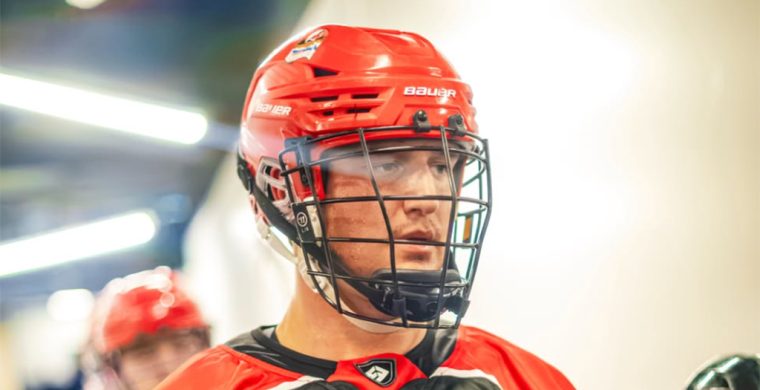
By Sam Laskaris Writer David Anderson knew that he wouldn’t have to wait too long to hear his name called at this year’s National Lacrosse League (NLL) draft. But even the Six Nations member himself was a bit surprised at how early he was selected. The Georgia Swarm drafted Anderson in the first round, ninth over-all, in the draft, which was held this past Thursday. “It was a really competitive draft this year and a lot of good players (were eligible),” Anderson said in a phone interview with The Turtle Island News, the morning after he discovered which pro franchise had obtained his playing rights. “I was fortunate enough to hear my name being called in the Top 10. But it definitely was unexpected, kind of startled me for a...
Styres joins Navan Grads for 2026-27 season
By Sam Laskaris Writer Six Nations member Kane Styres has headed to eastern Ontario for his third junior hockey season. Styres, a 17-year-old defenceman, had spent the past two seasons playing with the Caledonia Corvairs, a Junior B squad that competes in the Greater Ontario Hockey League. Styres, however, has moved up a notch on the hockey ladder this season. He’s joined the Navan Grads, an Ottawa-area Junior A club that participates in the 12-team Central Canada Hockey League (CCHL). Styres did score a goal in one of the Grads’ pre-season matches. But he was pointless in his first five regular season contests with the Navan team. Styres and his teammates won two out of their first five games this season. The Grads are one of six entrants in the...

New American pro box lacrosse league to launch in January
By Sam Laskaris Writer A new professional American box lacrosse league that has committed to building meaning relationships with Indigenous communities will launch this coming January. But it remains to be seen what sort of impact the American Box Lacrosse League (ABLL) will have on the amateur and established Ontario-based Arena Lacrosse League (ALL). The ALL features three squads that play their home contests out of the Iroquois Lacrosse Arena, including the defending league champion Six Nations Snipers. The Ohsweken Bears and Paris RiverWolves also stage their home matches at the Six Nations facility. Both the Snipers and Bears traditionally have numerous First Nations players on their rosters. And there’s a chance several of these players will opt to join the ABL this coming year. For its 2027 season, which...
Behind the Bricks: Rick Hill on the History and Legacy of the Mohawk Institute
By Maisha Hasan, Local Journalism Initiative Reporter, Burlington Local-News.ca As part of the Burlington Public Library’s Culture Days events, author Rick W. Hill Sr. will be speaking about the collection of essays in Behind the Bricks, an exploration of the history of the Mohawk Institute, a former residential school in Brantford and the longest-running residential school in Canada. Hill, a historian and museum curator, co-edited the collection alongside Alison Norman, Thomas Peace, and Jennifer Pettit. Hill, a member of the Beaver Clan of the Tuscarora Nation of the Haudenosaunee at Grand River, has a personal connection to that history: his great-grandfather attended the Mohawk Institute in the 1870s, and one of his aunts later attended the school. Ahead of his appearance in Burlington on Sept. 30, 2026, Hill spoke with...
Former Willow Lake Métis CEO’s consultancy firm wins Alberta Indigenous Business Award of Distinction
By Jeremy Appel, Local Journalism Initiative Reporter, Alberta Native News A consultancy firm founded by the former CEO of Willow Lake Métis Nation has taken home the 2026 Indigenous Business Award of Distinction at the Alberta Business Awards of Distinction. Justin Bourque founded Âsokan Generational Developments in 2023. The firm has worked with more than 40 Indigenous communities on nearly $3 billion in transactions, largely but not exclusively in the energy sector. The Indigenous Business Award of Distinction honours an Indigenous-owned business that facilitates economic development for First Nations, Métis and Inuit communities on the road to reconciliation. In an interview, Bourque called the award “such an honour,” adding that it was a “pleasant surprise” to even be a finalist, “let alone stacked up against two very impressive companies and...
Solar farm proponents shine a light on their project
By Joe O’Grady, Local Journalism Initiative Reporter, Temiskaming Speaker TEMISKAMING SHORES – Public input continues to be welcome as proponents of a solar farm southeast of here continue consultations. About two dozen people turned out for an open house hosted by proponent Neoen on September 21 to learn more about a proposed solar farm near Lorrain Valley. Among those in attendance upstairs of the Shelley Herbert-Shea Memorial Arena in Haileybury were cottagers and seasonal residents, some of whom came to learn about the potential impacts on Highway 567 and the Lorrain Valley Road. Others questioned whether construction will result in increased traffic and potentially impact the tranquility of the scenic area. A few were even entrepreneurial, looking for professional connections and employment, as the initiative is projected to create up...
Manitoba to purchase private campground near site of former residential school
The Manitoba government is partnering with the province’s second-largest city to purchase a private campground where historical records show a cemetery for children who died at a residential school is located. Premier Wab Kinew announced his government is working with the city of Brandon to acquire the Turtle Crossing Campground site, located south of the former Brandon Indian Residential School in western Manitoba. A news release says the cemetery was used from 1985 to 1912 after the area was converted into a suburban park. First Nations groups have long advocated for a search of the area to determine how many children were buried in the area and their identities. Kinew says any future decisions regarding the site will be be done in consultation with residential school survivors, impacted First Nations...
French-only Quebec election voter guides prompted 160 complaints over five days
By Marieke Glorieux-Stryckman When Derek Heatherington, a retired college professor living in the Eastern Townships region of Quebec, heard that the provincial elections agency was sending out unilingual French information guides this year, he decided to act. “This situation really spoke to me, because we’re getting to the point here where we’re talking really about voter suppression,” he said. Élections Québec announced on its website on Sept. 1 that it was not sending out any English language guides due to legislation adopted in 2022 requiring provincial government institutions to issue public communications only in French. Instead of the usual bilingual documents, the agency suggested voters could scan a QR code on the guide to find the English information online. Heatherington responded to that announcement by filing a complaint and sharing...
Saskatchewan to pursue two large nuclear reactors: Premier Scott Moe
Saskatchewan’s premier says his government is moving forward with a plan that could see the first of two large nuclear reactors up and running in 16 years. Scott Moe announced Tuesday they’re looking at building two large reactors somewhere in the province’s northwest, and the first could be online in 2042. SaskPower, the province’s electrical utility, will evaluate potential locations and speak with people who live in those communities. “We are charting a path forward for one of the largest energy economic development opportunities in our province’s history,” Moe said. The premier said it’s premature to estimate how much the reactors would cost. New builds in the United States have been pegged in the billions of dollars. Moe also didn’t specify where the province would construct the reactors, but said...
Hupačasath hereditary chief orders Cermaq to close Boot Lagoon hatchery
By Nora O’Malley, Local Journalism Initiative Reporter, Ha-Shilth-Sa Port Alberni, B.C. – Tsu-tsii-in(Alton Watts), tyee ha’wilth (hereditary chief) of Hupačasath First Nation in the Alberni Valley, publicly demanded on Sept. 23 that Atlantic salmon farming company Cermaq close their Boot Lagoon hatchery operation near Port Alberni by the end of the year. Watts says Cermaq is polluting Nuu-chah-nulth waters and bringing disease to the fish that swim up their rivers. He says cutting off the hatchery is one way to make sure their fish farms cease operations. “I just want them gone and hopefully they clean up their mess and we never have to deal with them again,” said Watts. Located on Hupačasath traditional territory by Great Central Lake, roughly an hours’ drive from Port Alberni on the west coast...
National Day for Truth and Reconciliation recognized on B.C. election campaign
Politicians in British Columbia’s election campaign are paying their respects on National Day for Truth and Reconciliation. NDP Leader David Eby will be marking the day on the Tk’emlups te Secwepemc First Nation, which came under a spotlight on the weekend when an apparent group of white nationalists stood at the reserve and unfurled a banner in reference to what are believed to be unmarked graves on the site. Eby was invited to mark the day and his campaign says that in light of recent events, the leader wanted to be there. Assembly of First Nations National Chief Cindy Woodhouse Nepinak will also attend the same event at the Powwow Arbour on the reserve. The First Nations Leadership Council issued a statement Tuesday condemning what it says is white nationalist...
‘Our biggest job is to educate’: Yorkton Tribal Council chief calls for year-round reconciliation
By Andrea Moss, Local Journalism Initiative Reporter, SaskToday.ca, SASKTODAY.ca YORKTON, Sask. — As communities across Canada prepare to mark the National Day for Truth and Reconciliation, Yorkton Tribal Council Chief Isobel O’Soup says education remains critical to understanding the lasting impacts of residential schools and the challenges Indigenous people continue to face today. O’Soup said many Canadians remain unaware of the history of residential schools and the intergenerational trauma they caused, despite years of public discussion and the release of the Truth and Reconciliation Commission’s 94 Calls to Action. The Calls to Action were released more than a decade ago, but O’Soup believes there is still considerable work to be done to increase public awareness and understanding. “We didn’t start off as drug addicts and alcoholics and all the social...
LNG Canada to double output from B.C. terminal as world clamours for energy
By Lauren Krugel The partners behind Canada’s first liquefied natural gas export terminal are proceeding with a project that would double its capacity as countries around the globe clamour for reliable sources of energy. LNG Canada announced Tuesday that it has made a final investment decision to go ahead with the Phase 2 expansion of its facility in Kitimat, B.C., which would bring its capacity to 28 million tonnes per year. “This will make LNG Canada one of the largest LNG facilities in the world and it will help move Canada towards becoming one of the world’s Top 5 LNG exporting nations,” Chris Cooper, chief executive of LNG Canada, told a news conference in Vancouver. “But Phase 2 is much more than just tonnes. It means thousands more jobs and...
Mi’kmaw actor’s directorial debut highlights injustice faced by Donald Marshall Jr.
By Lyndsay Armstrong A Mi’kmaw actor has made his film directing debut in a movie inspired by a road trip he went on with his uncle, Donald Marshall Jr., who was wrongfully convicted of murder and spent 11 years in jail. Glen Gould, from Membertou First Nation, was 17 when his mother sent him to Maine to help his uncle and bring him back home to Cape Breton. “It was one thing after another on that road trip,” Gould said in a recent interview. “We got our car stolen, ended up stranded at a motel … so I took that road trip and turned it into a movie.” During the trip, Gould said Marshall Jr. shared many stories and recounted what happened the night his friend, 17-year-old Sandy Seale, was...
From chocolate to coin purses, Lake Ontario merchandise proves a hit with consumers
By Tara Deschamps After Tareq Hadhad and his family moved to Antigonish, N.S., as Syrian refugees in 2016, they built a business on the premise that chocolate was so uniting it could create peace. So when U.S. President Donald Trump renamed Lake Ontario to Lake America in late August, the chief executive of Peace by Chocolate felt he couldn’t ignore the antagonism. Within a day, his company had created the Lake Ontario bar — 92 grams of milk chocolate and maple cream, made partially with Ontario ingredients, packaged in a Canadian flag wrapper and emblazoned with the body of water’s name and information about its Indigenous origins. “We wanted to be there for our country, no matter how odd that it sounded,” Hadhad said. “If you showed me a Lake...